
WORKS
Every commission begins as a problem that the stone sets: too large, too small, too warm in colour, too soft for a ring. What follows is the answer, not the decoration.
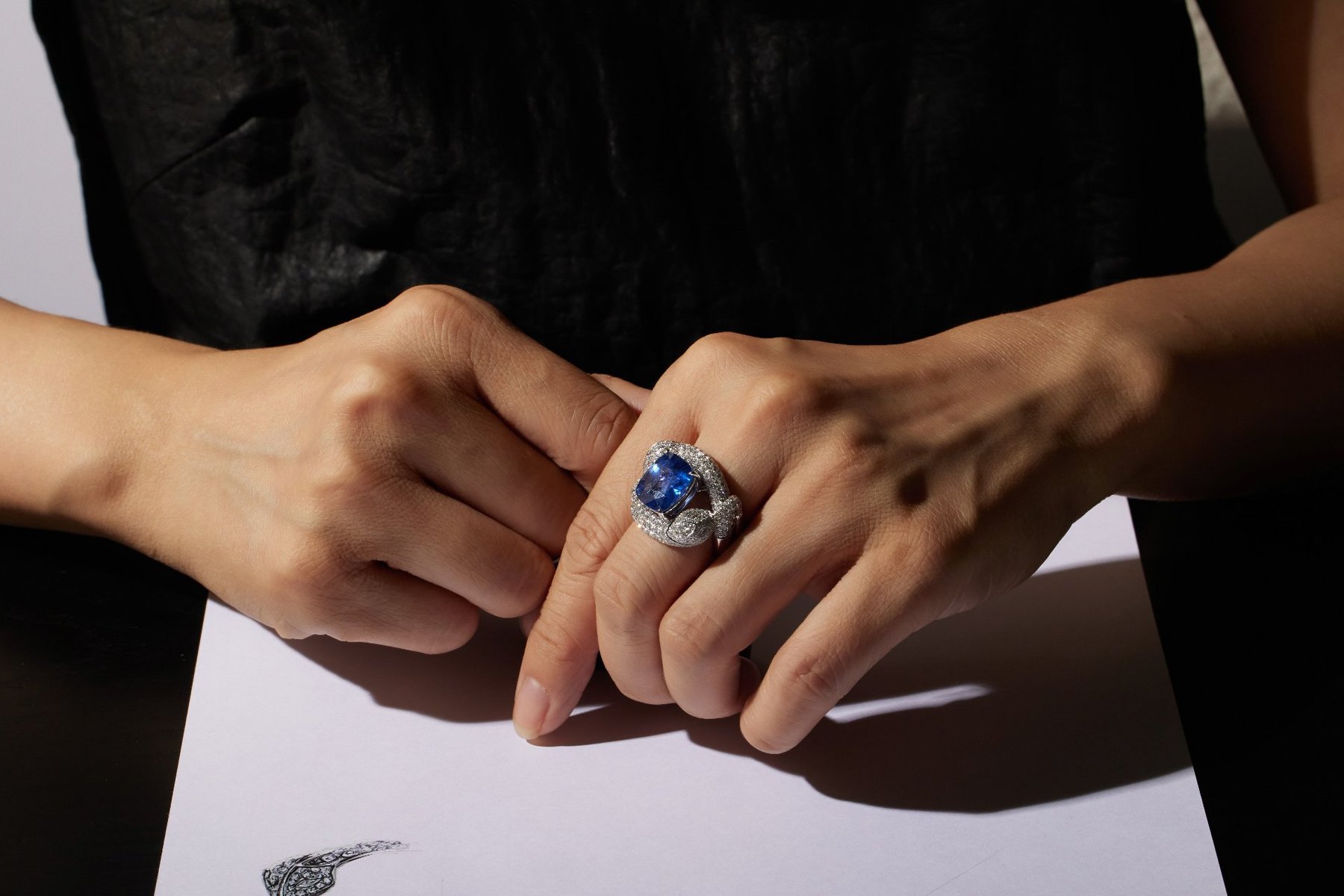
Ouroboros ring · 7.03 ct sapphire, cushion cut, no indication of heat treatment.
01 · SAPPHIRE · RING
Seven carats changes the engineering, not just the size. A stone that large on a thin band looks like a mistake; here the body of the snake is the setting — head to tail, paved end to end, so the gold reads as light and the weight is distributed instead of concentrated.
The ouroboros is not a motif borrowed for its meaning. It is the structure that solves the problem: a continuous curve that holds the stone from both sides and closes on itself.
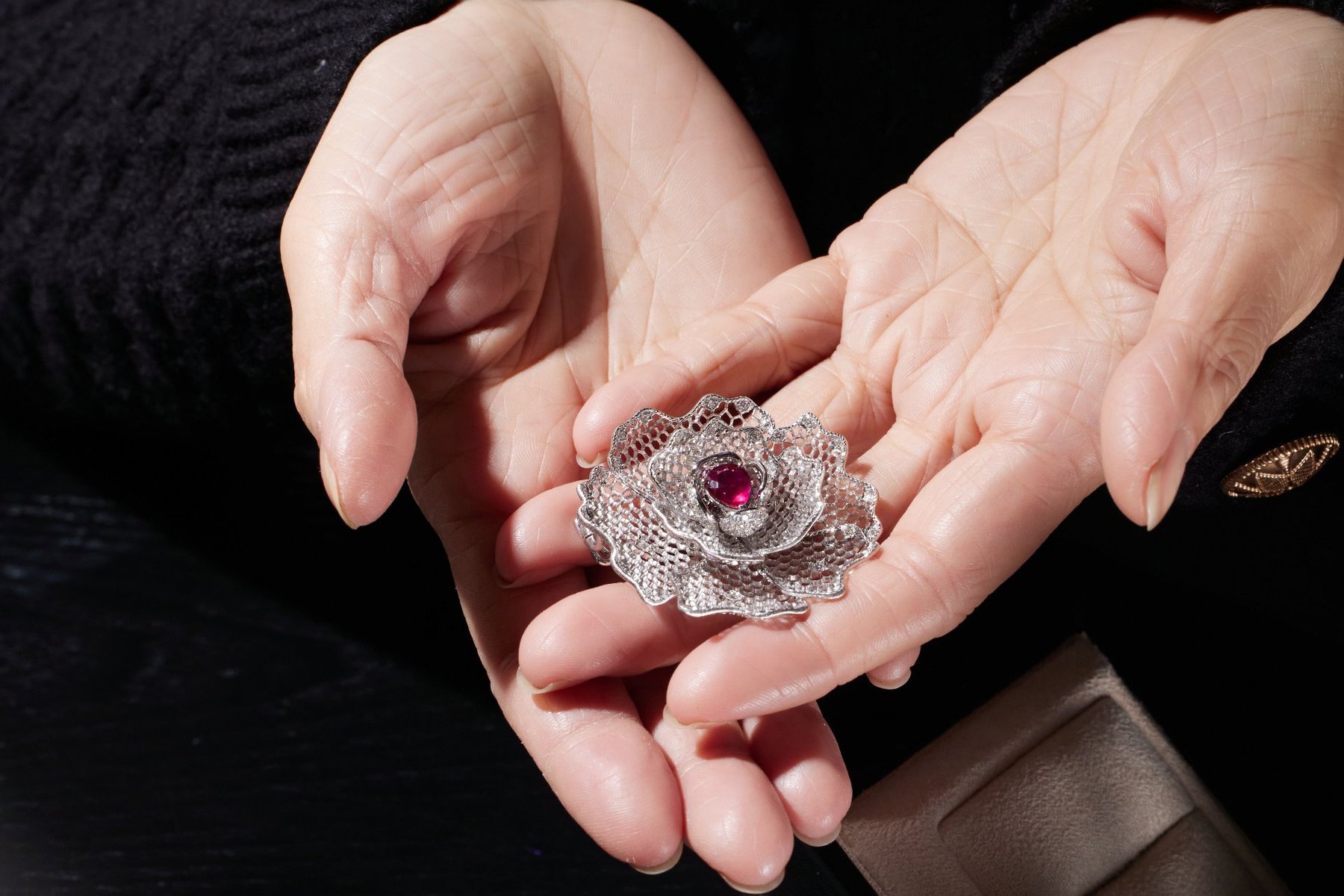
Peony brooch · 2.00 ct pigeon's blood ruby, petals in sawn Tulle openwork.
02 · RUBY · BROOCH
A red stone dies in a closed setting: with no light behind it, the colour goes flat and heavy. The answer was not more diamonds around it but less metal — the petals are sawn into a honeycomb, each cell reworked by hand, so light reaches the stone through the flower itself.
The stone is held from behind, with no claws crossing the face. On a lapel the piece reads as a flower, not as a setting with a stone in it.
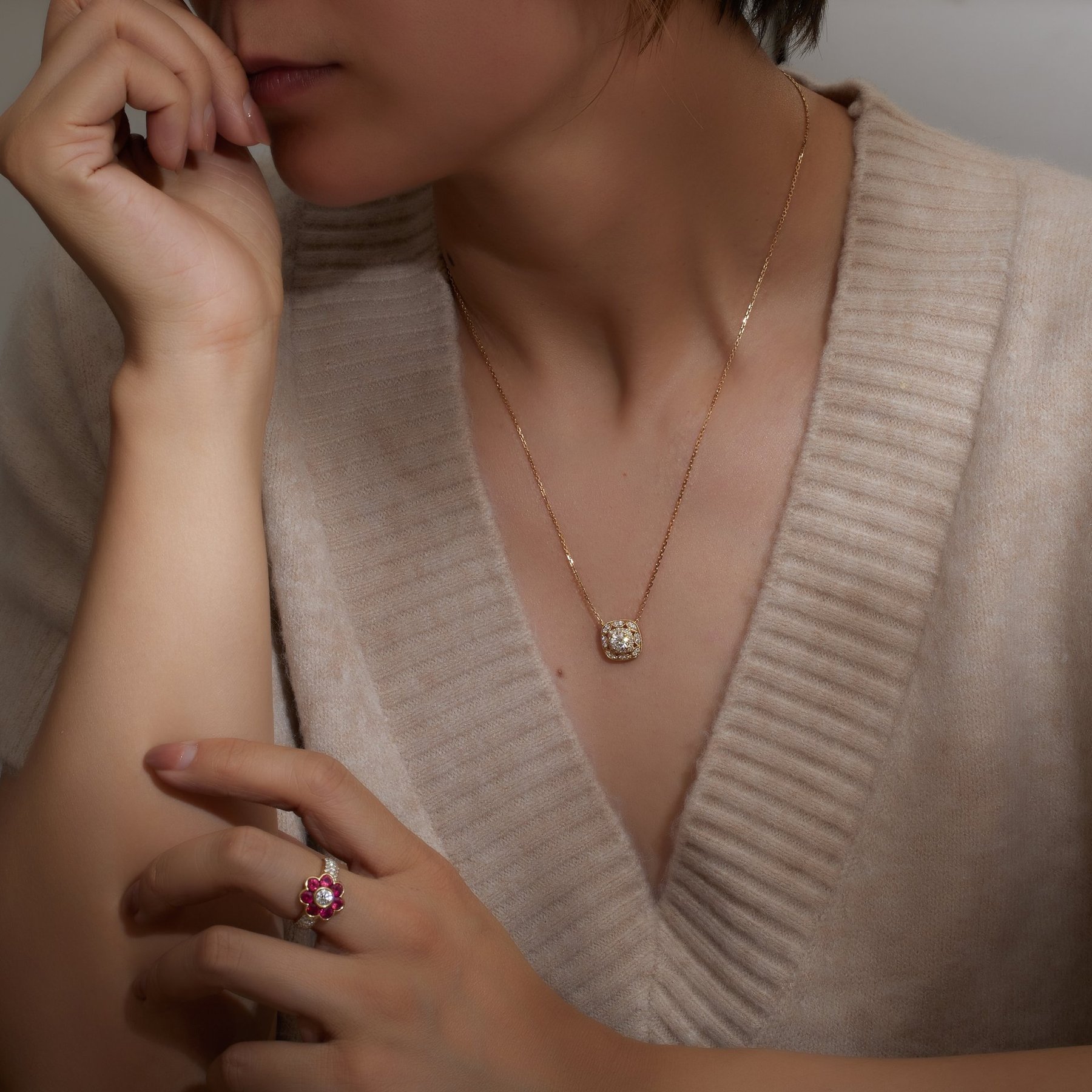
Rosebud pendant · 0.44 ct diamond, the client's own stone, unmoved from its original cut.
03 · DIAMOND · PENDANT
A small stone in a ring has nowhere to hide. Set as a rosebud — petals closed around the centre, diamonds tucked into the joins, a beaded edge finishing the rim — the piece reads at the scale of the setting rather than the stone.
The diamond came from the client's own ring and was not recut. The old white gold mount was melted down and credited against the new work, which is standard here: metal is value, and it does not need to be thrown away to make something new.
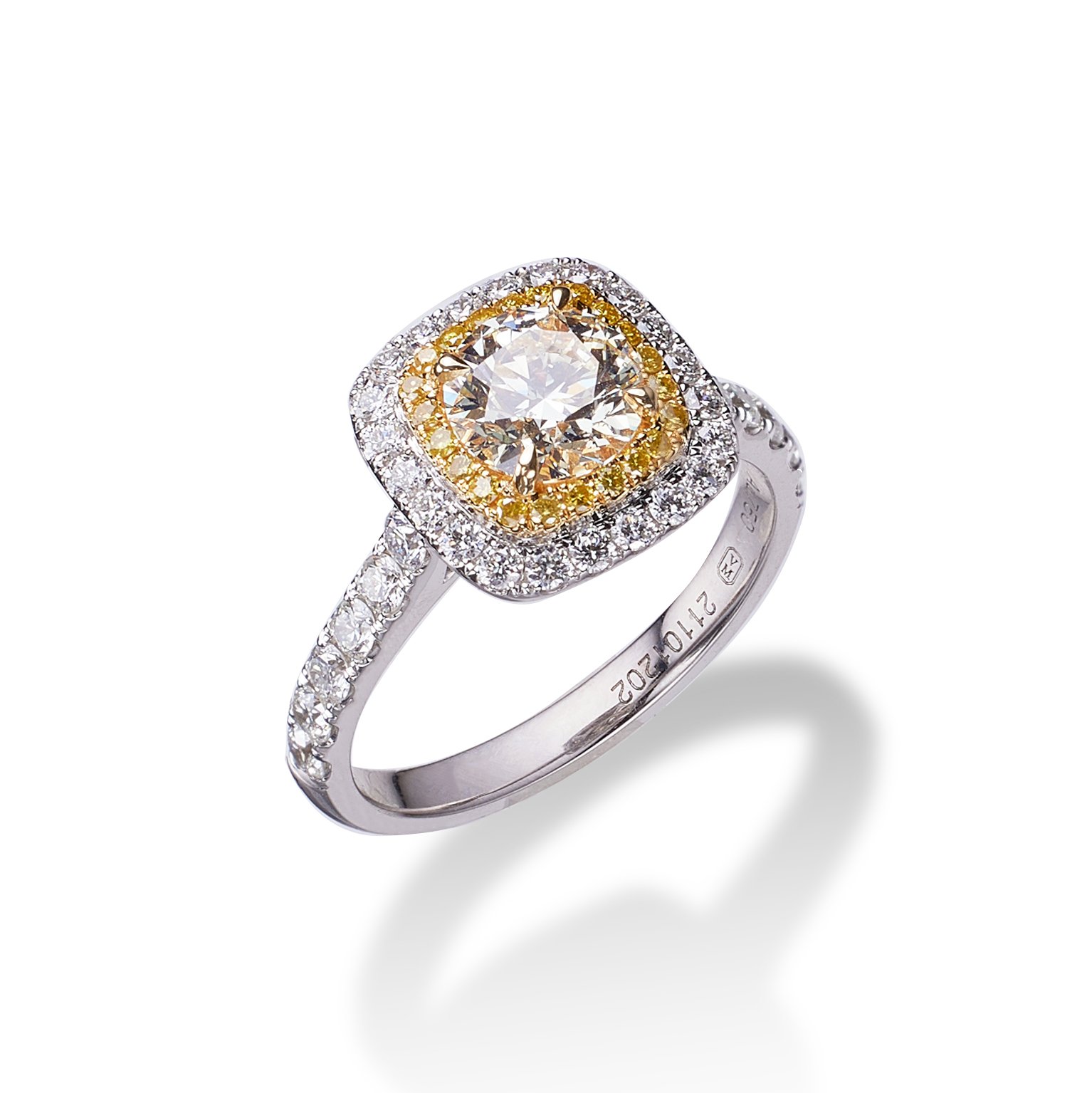
Warm diamond ring · 1.06 ct, yellow diamonds inside the halo, white outside.
04 · DIAMOND · RING
A diamond with a warm tint is usually sold as a problem to be corrected. Here it was treated as the subject: an inner halo of yellow diamonds picks up the tint, an outer halo of white diamonds frames it, and two colours of gold split the setting so the warmth looks deliberate.
The stone is the same one the client already owned. The original platinum mount was melted and credited, as with the pendant.
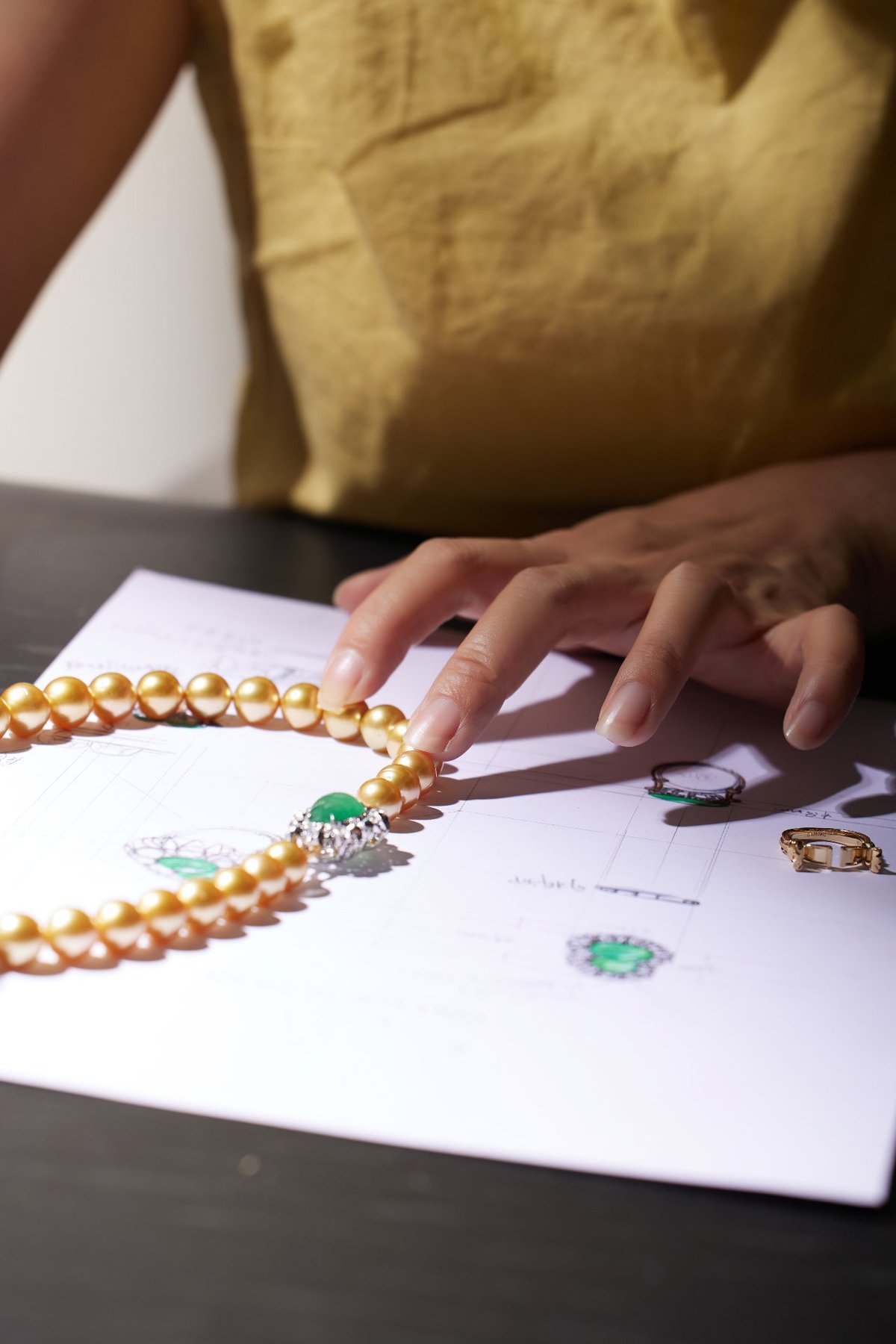
Jadeite gourd · one carving, four ways to wear it.
05 · JADEITE · CONVERTIBLE
The gourd was already carved and already good; the question was how often it would actually be worn. The answer was a single mount that converts — pendant, ring, bracelet, necklace — so the same piece follows the occasion instead of sitting in a box.
Jade is not sold here, but a client's own jade is assessed, designed for and set with the same care as any coloured stone.
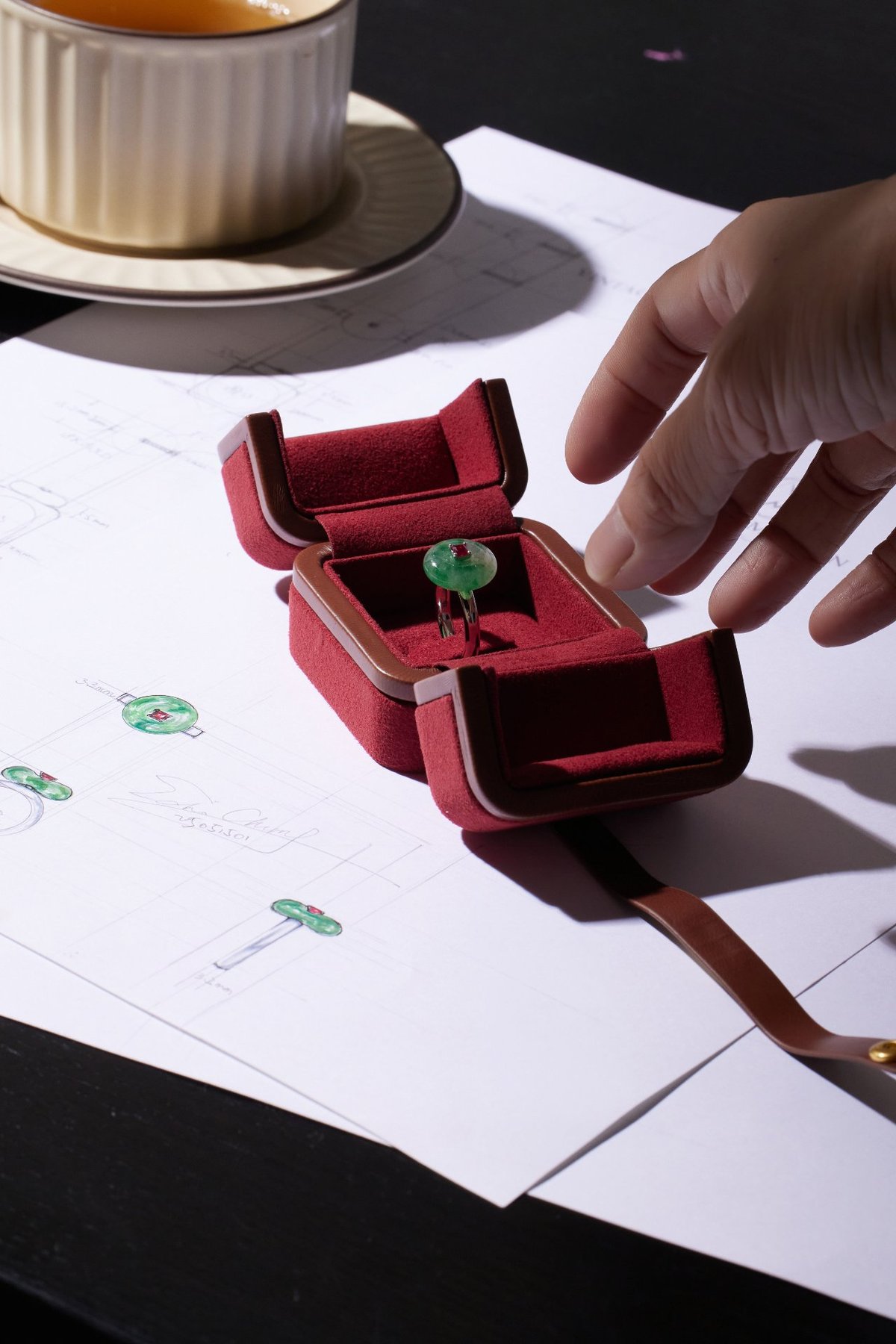
Jadeite bi disc on a platinum band.
06 · JADEITE · RING
A bi disc has a hole at its centre and no pavilion to set into, which is why most of them end up as pendants. Here the platinum band passes through the disc and holds it at the rim, so the whole face stays visible and the ring sits flat on the hand.
OLDER STONES
A large part of the work is not new jewellery at all. Stones inherited or bought years ago are assessed, redrawn, and reset; worn mounts are melted and credited against the new setting. Nothing is discarded for the sake of a fresh start.
Two of the pieces above began exactly this way — a diamond in a ring that was no longer worn, and a stone whose original mount was worth more as metal than as a setting.