
BESPOKE HIGH JEWELLERY · CHENGDU
A commission begins with a stone and ends with something that will not be made twice. The same person chooses the stone, draws the piece, checks it at every stage, and looks after it long after it leaves the studio.
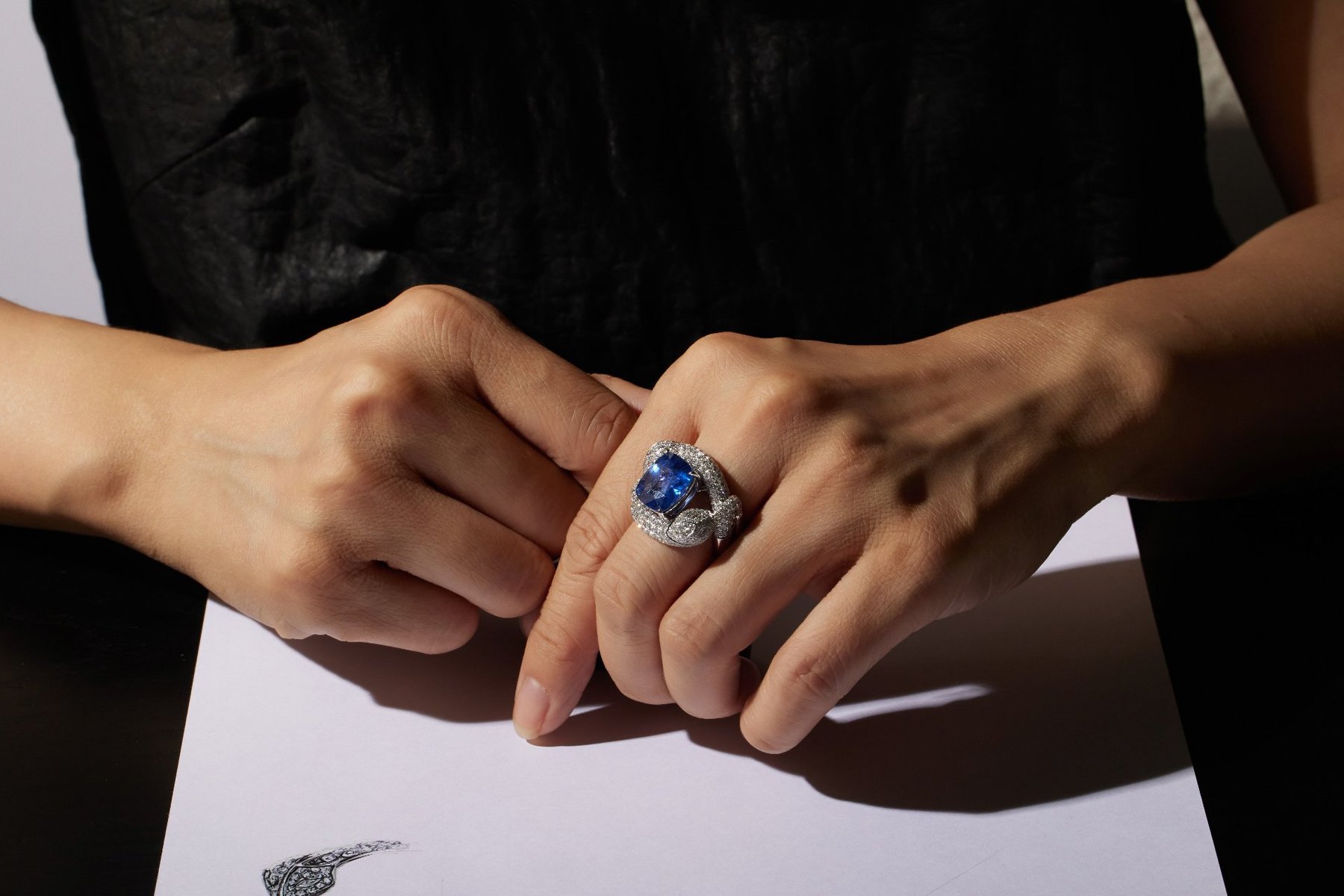
7.03 CT SAPPHIRE · OUROBOROS
Seven carats is not a larger ring; it is a different problem. Here the body of the snake carries the stone, paved end to end so the gold reads as light rather than mass.
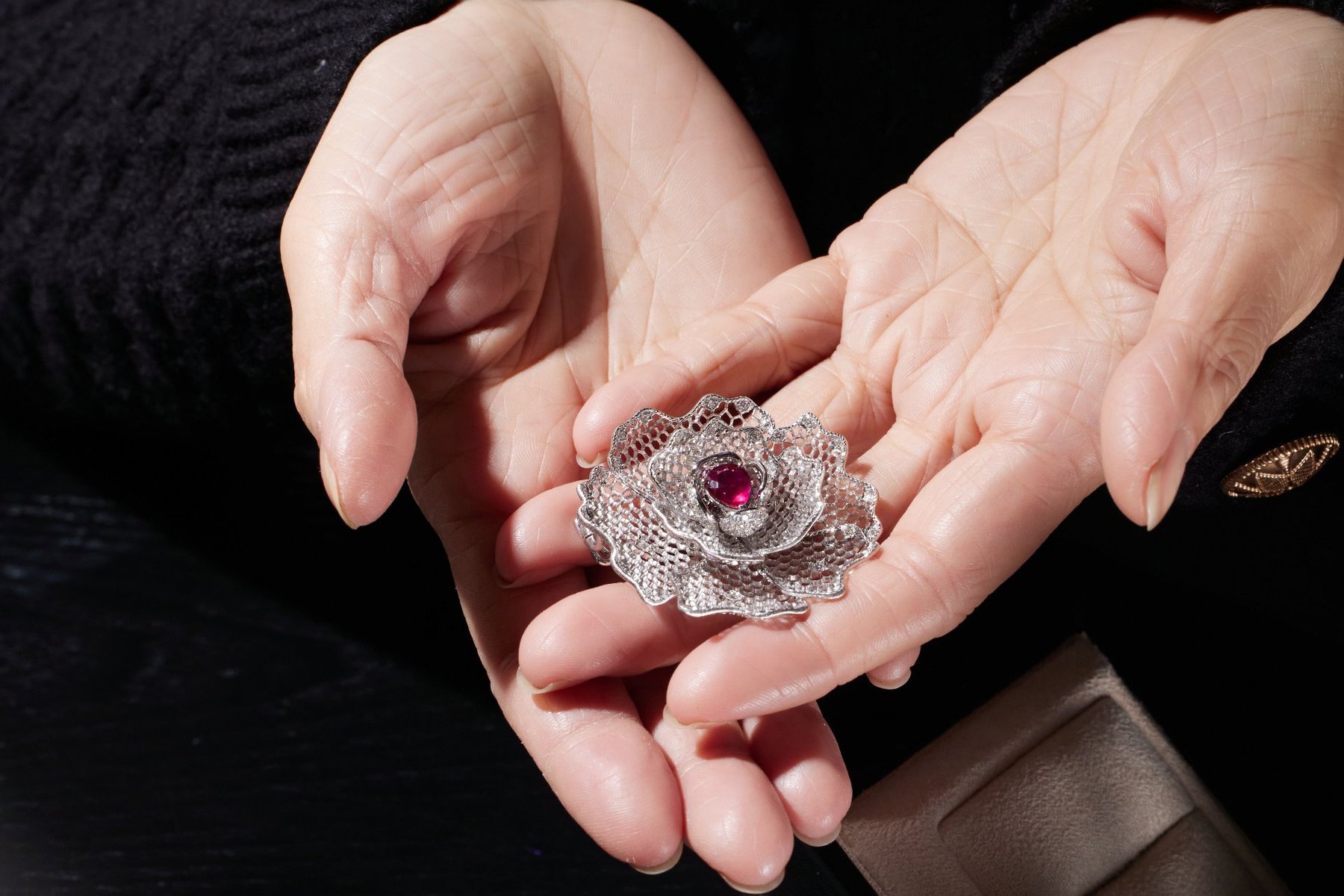
2.00 CT PIGEON'S BLOOD RUBY · BROOCH
The petals are sawn into a honeycomb and each cell is reworked at least five times. Metal steps back; the red is allowed to stay red.
WHAT IS DONE HERE
Engraving, openwork and lacquer are not styles applied at the end. They decide how a piece is built, what it weighs, and how it will look in thirty years.
A burin cuts the surface; a laser does not. The piece is polished before it is engraved and never polished again — the ridges of each cut are what catch the light. Crosshatched lines are laid in two or three directions by hand, so no two cuts are identical under a raking light.
A saw, not a drill: the metal is pierced cell by cell until it behaves like fabric. Every cell is filed and reworked at least five times. It is the most difficult work in the studio, and the reason a piece can look large while weighing almost nothing.
Natural lacquer, built in layers over gold and silver, cured in a humid cabinet and polished back between each coat. A single surface may take months. It is a technique few jewellers use at all, and it cannot be rushed by adding heat.
“Not more metal. Less of it.” ON TULLE
EVERY STONE HAS A DOSSIER
Each commission keeps a dossier: where the stone came from, what it was graded as, the drawings, the metal weights, the work done and the work still possible. If a piece is later remade, reset or passed on, the record goes with it.
Older jewellery is treated the same way. Stones that have been sitting in a drawer for twenty years are assessed, redrawn and reset; worn mounts can be melted and credited against the new work.